REV1
Technologies — Auburn Hills
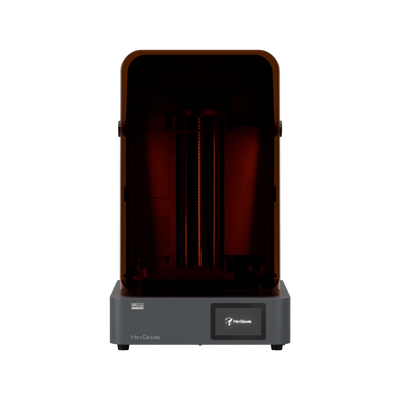
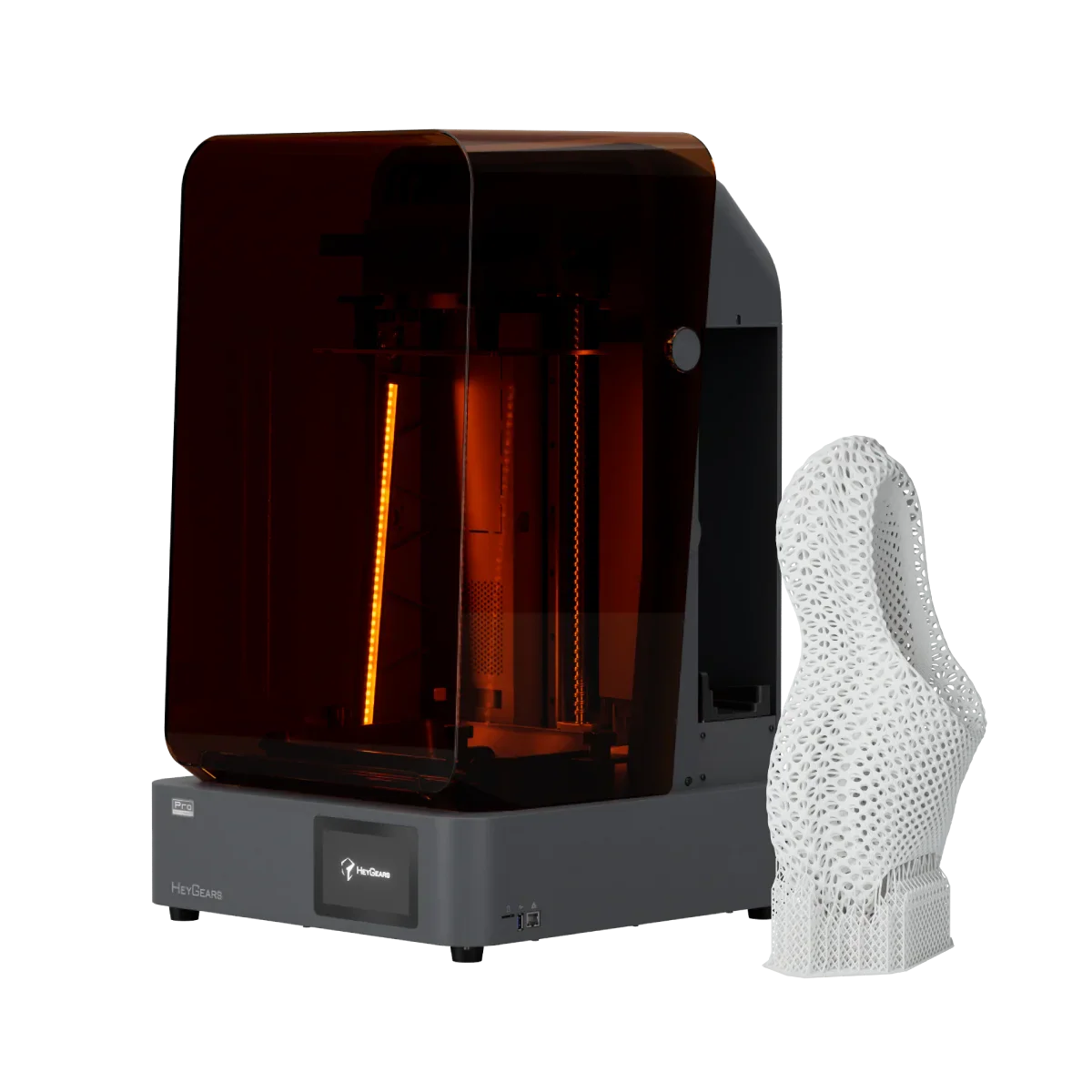
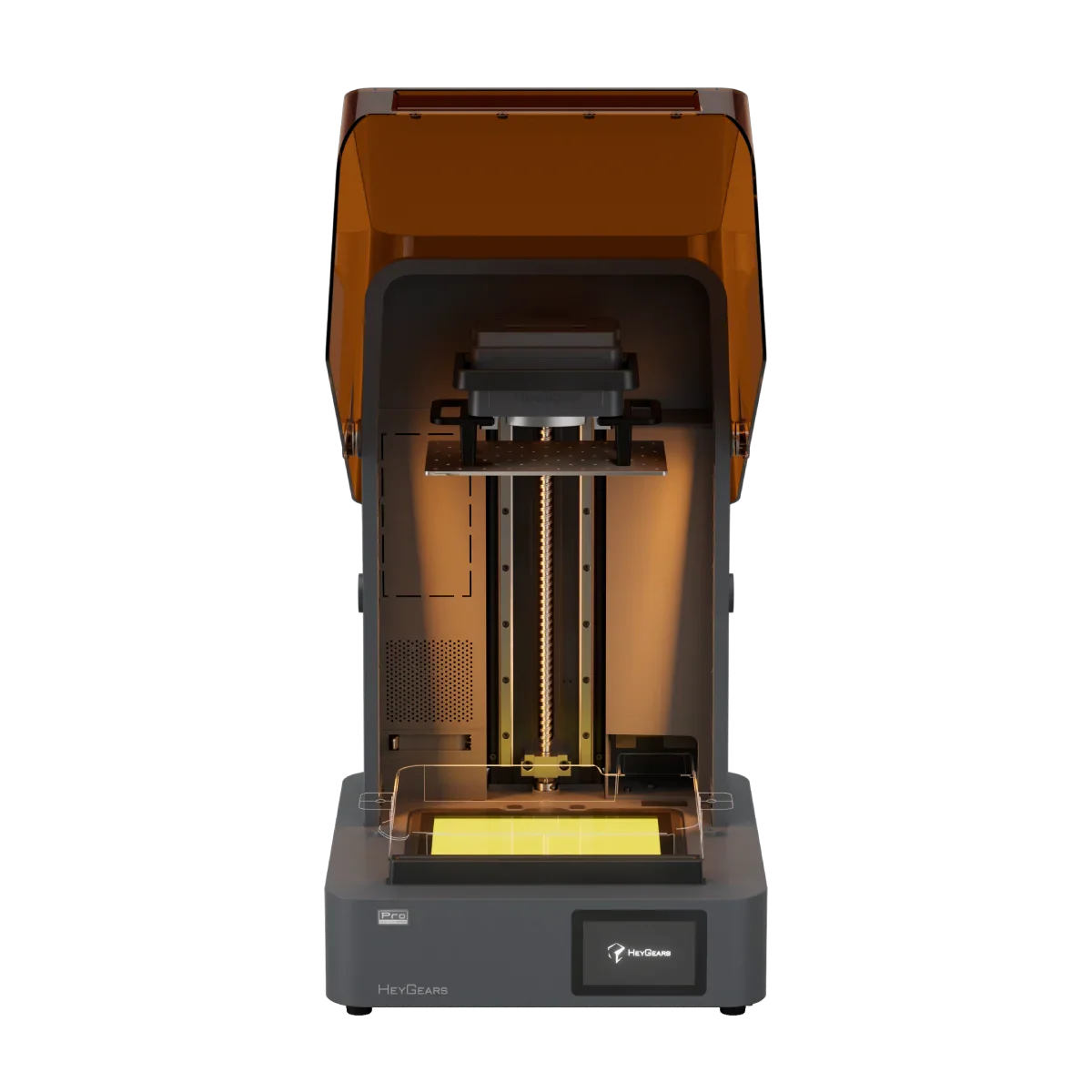
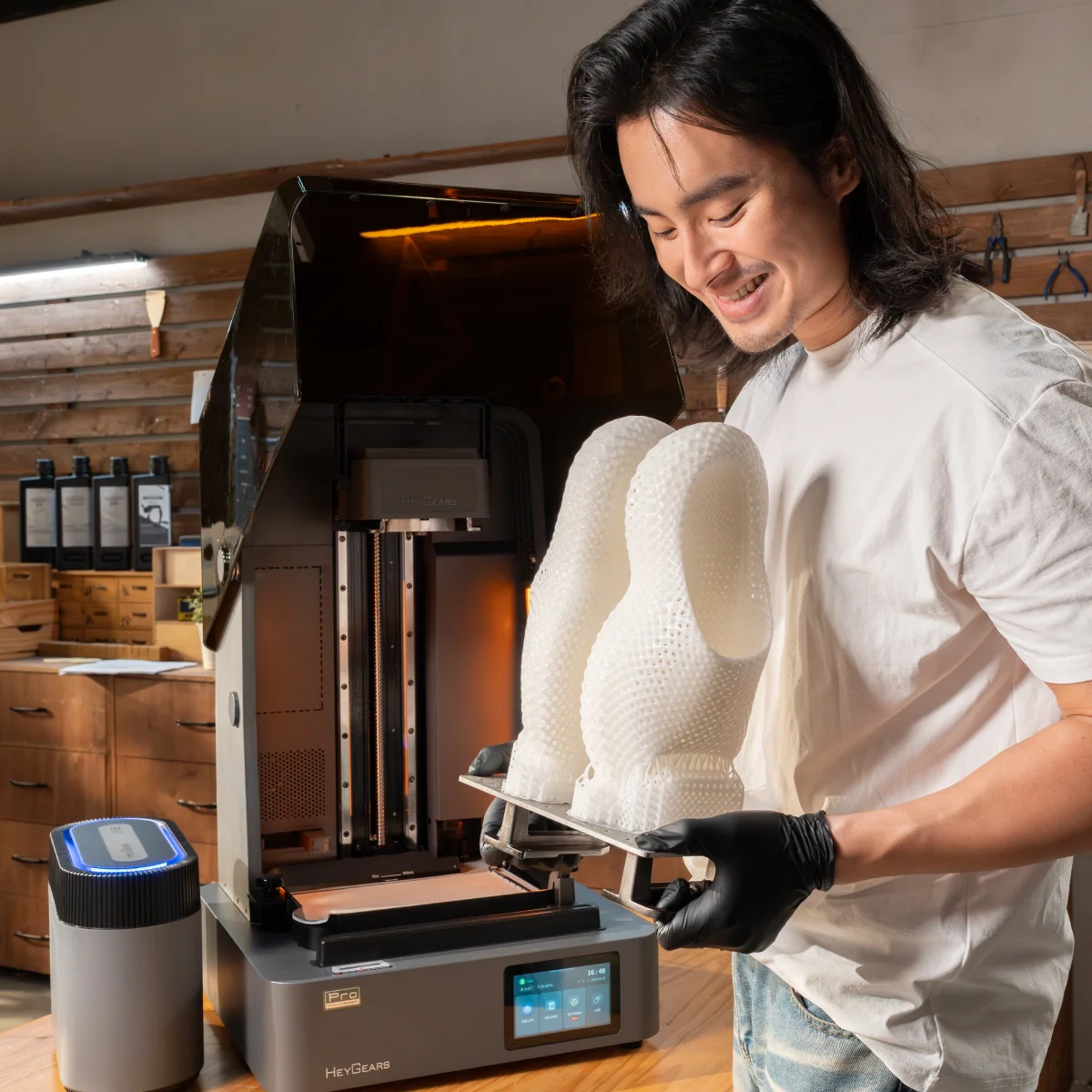
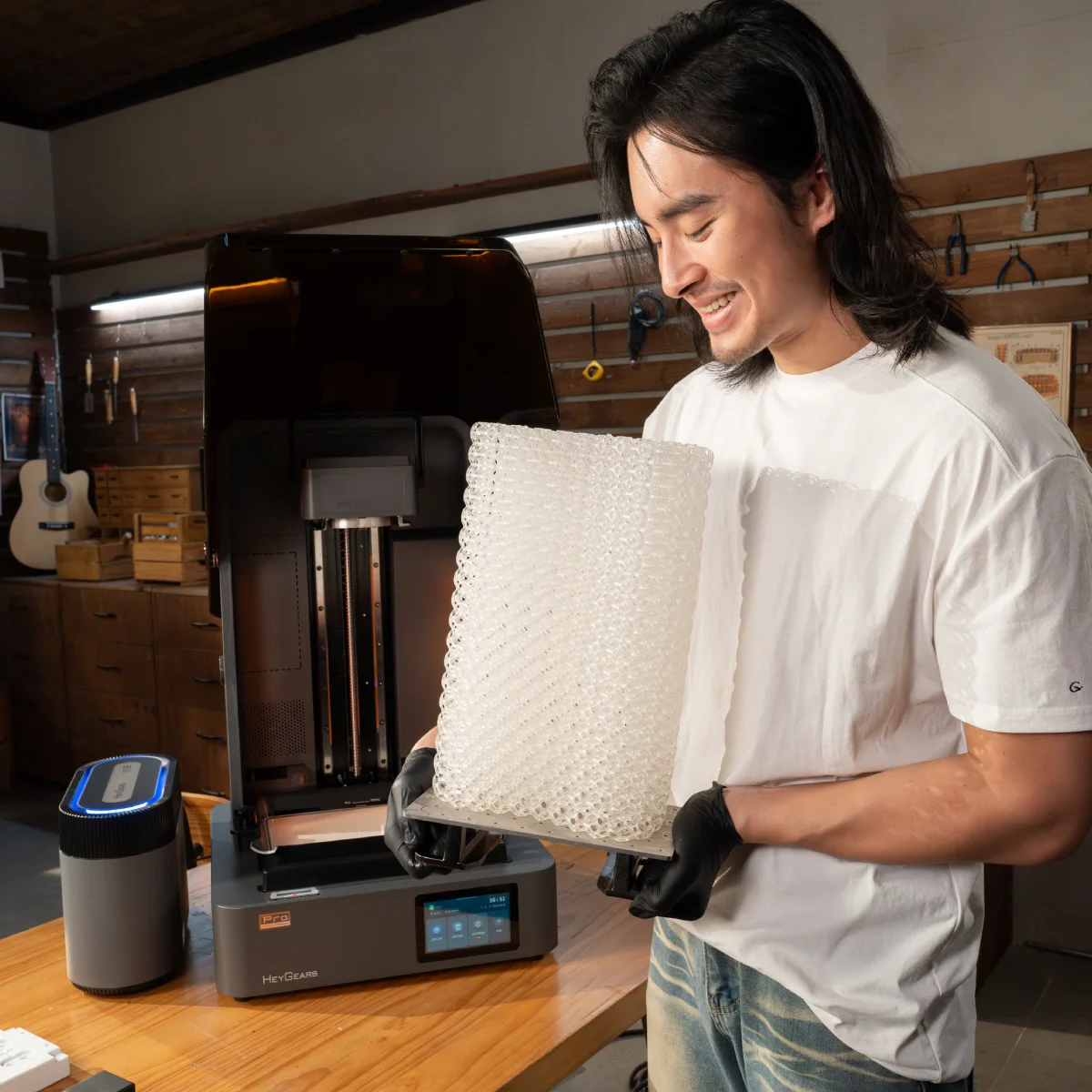

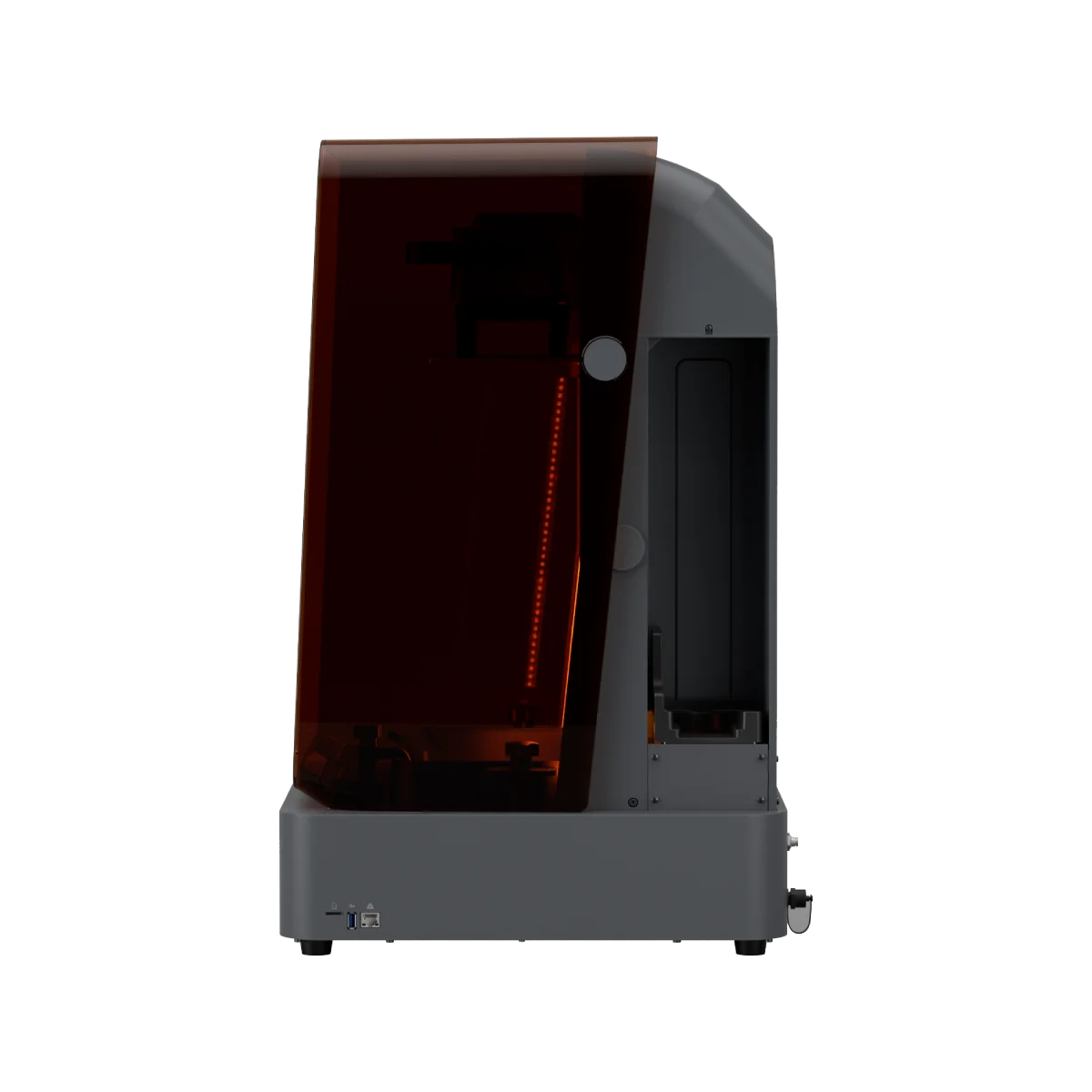
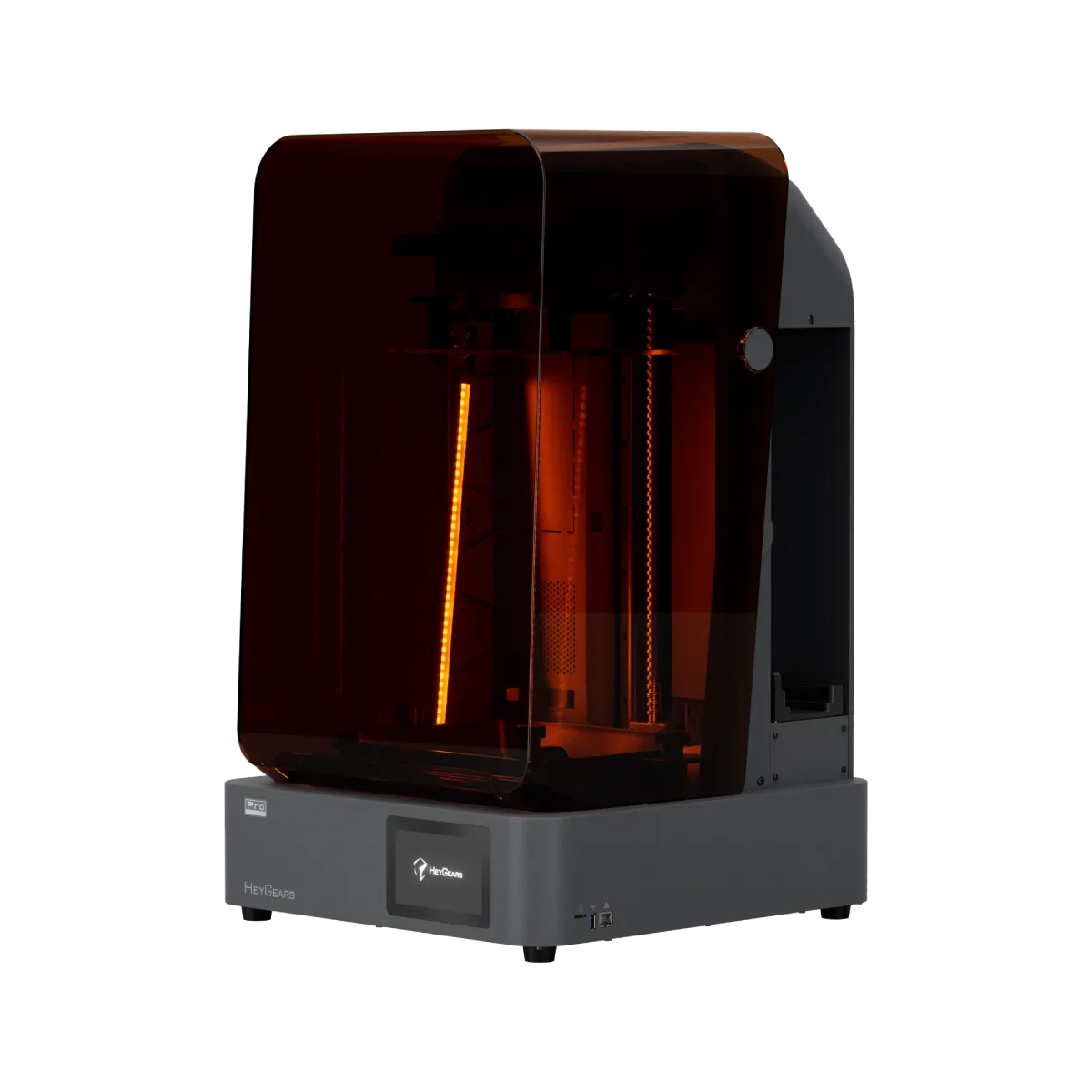
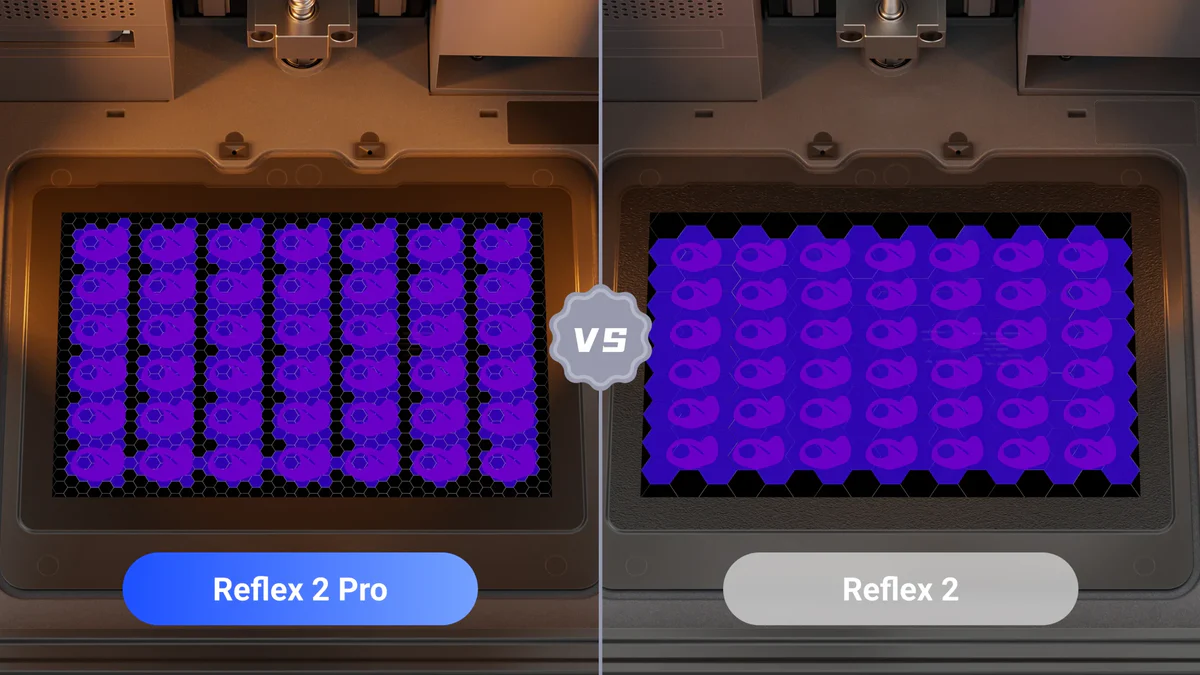
With 1032 independently addressable LEDs, the Reflex 2 Pro matches its projected light area exactly to the contours of all nested parts on the build plate. Empty regions between models receive no unnecessary UV exposure — reducing resin residue, improving surface quality, and increasing dimensional accuracy compared to fixed-zone or single-source MSLA engines.
Each of the 1032 light zones has its own custom collimating lens paired with a dual-sided microlens array containing 468,000 individual microlenses. This optical stack delivers highly collimated, uniform light with a 10% energy transmission rate — double that of conventional LCD printers — enabling up to 35 W/m² curing intensity for faster layers and higher-performance materials.
The MASK visual calibration algorithm applies 86,020-zone compensation to maintain ≥94% light uniformity and print accuracy of ≤0.05 mm across the full build plate — from the center to the outer edges. For batch production this means part #40 on a full tray prints with the same dimensional result as part #1, throughout the screen's 6,000+ hour life.
The Amber Screen Pro's 10% energy transmission rate is double that of conventional LCD printers. This drives up to 35 W/m² of curing intensity at the build plate — shortening exposure time per layer and enabling the curing of high-performance engineering resins that require short-wavelength, high-intensity UV. At 16 hours of daily use, the screen is rated for a full production year without replacement.
The Amber Screen Pro uses a large-molecule liquid crystal layer with enhanced UV resistance — contrast and light transmission remain within 10% deviation after 6,000 hours of printing under test conditions. Structural reinforcement in the liquid crystal support pillars adds 100× greater pressure resistance, handling high-viscosity resin stress without degradation over 10,000+ peel cycles.
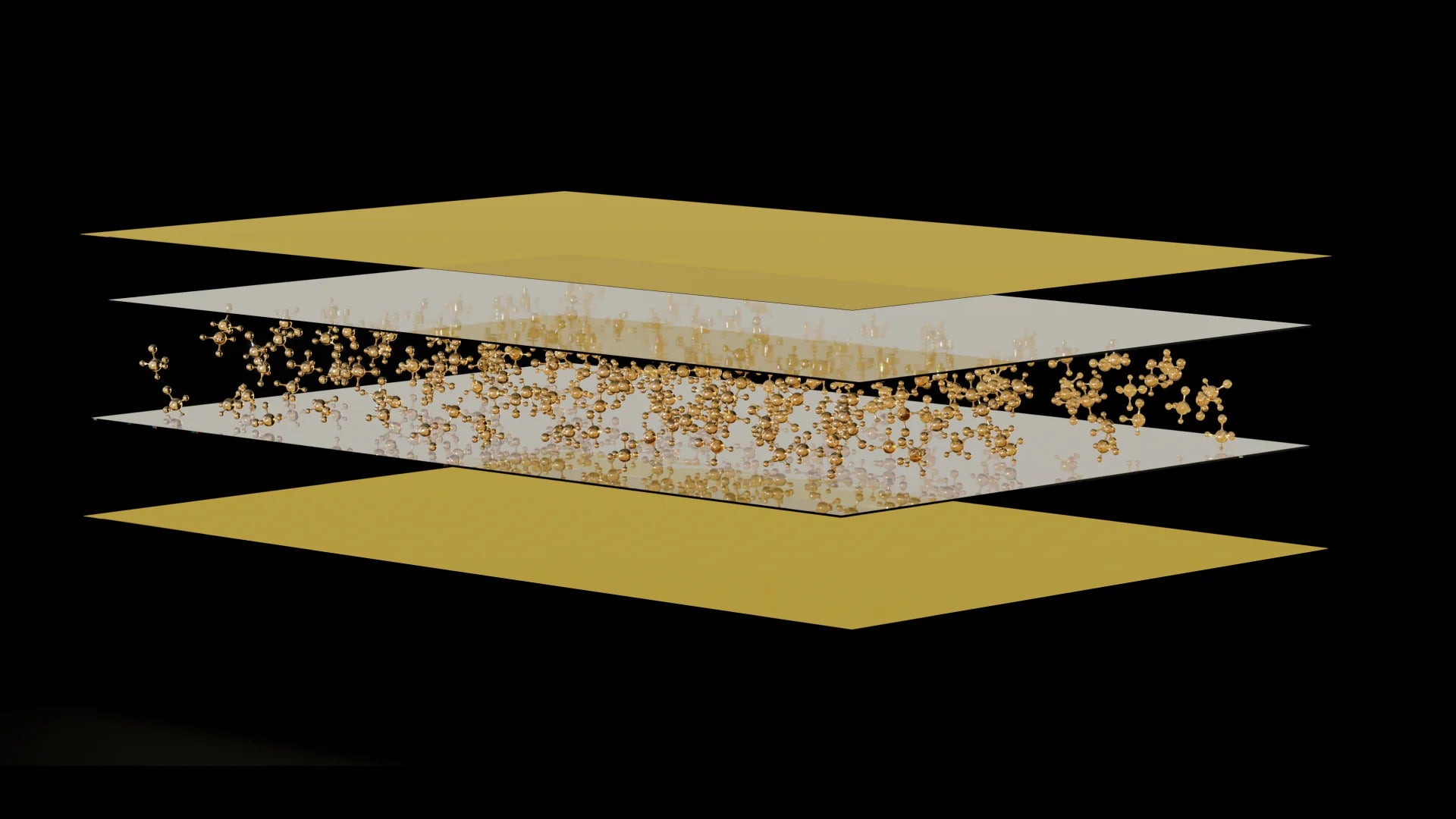
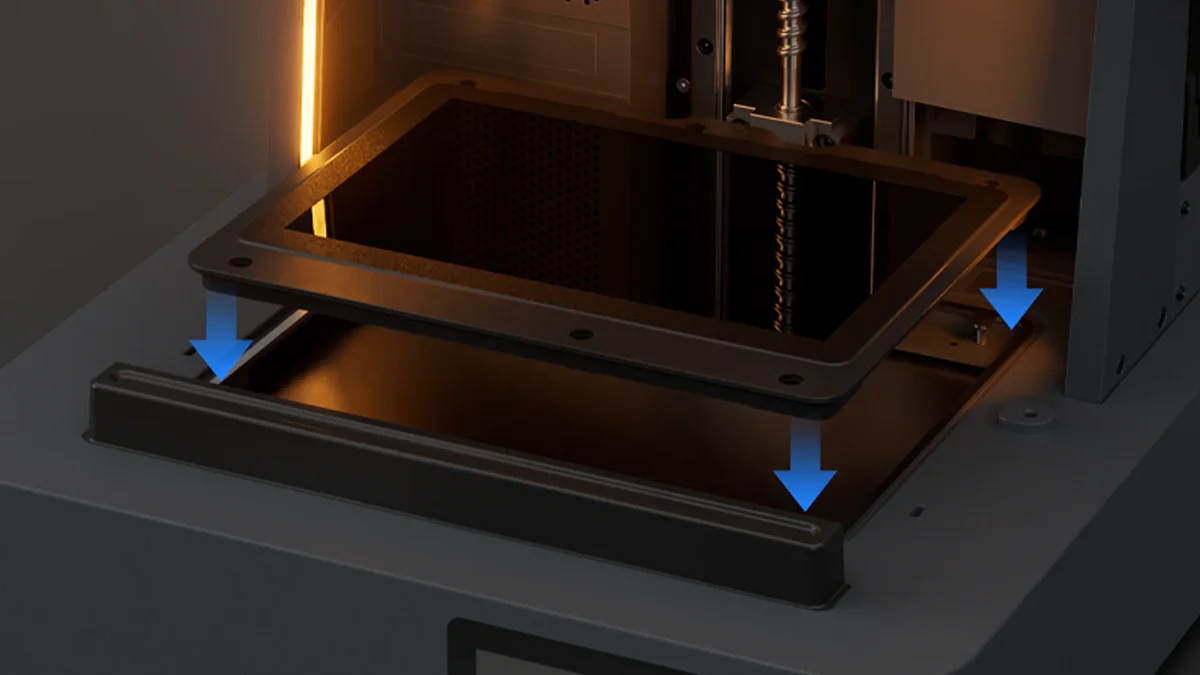
The Amber Screen Pro's modular design allows fast replacement without technician visits when it reaches end of life. Rev1 stocks replacement screens for next-day US shipment. Treating the screen as a scheduled consumable rather than an unexpected repair event is the right production mindset — and the Reflex 2 Pro is designed for it.
The MASK visual calibration algorithm applies 86,020-zone light intensity compensation throughout the screen's entire operational life. As the screen naturally ages, MASK compensates — maintaining ≥94% uniformity and ≤0.05 mm print accuracy from first hour to last, without manual recalibration.
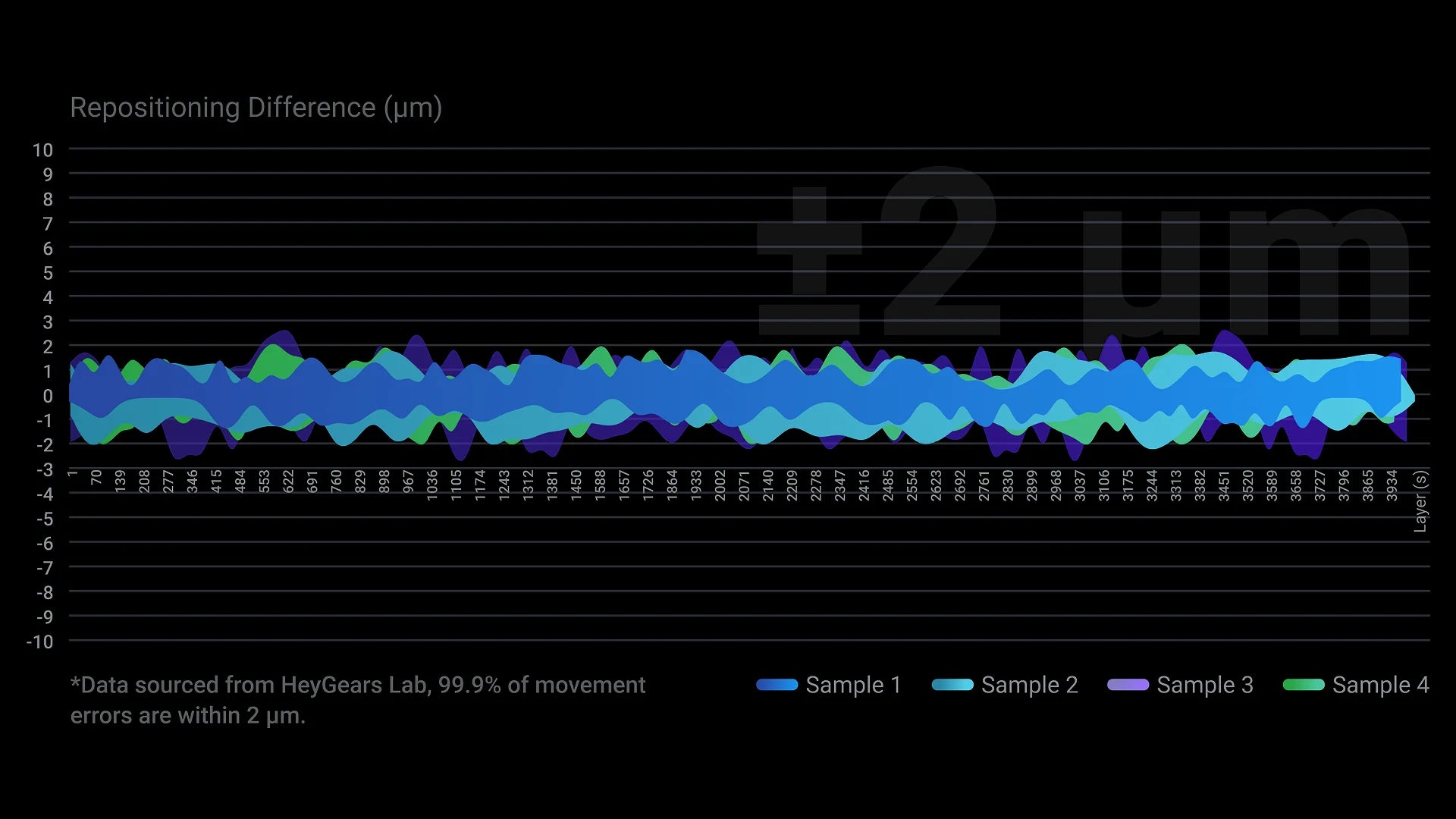
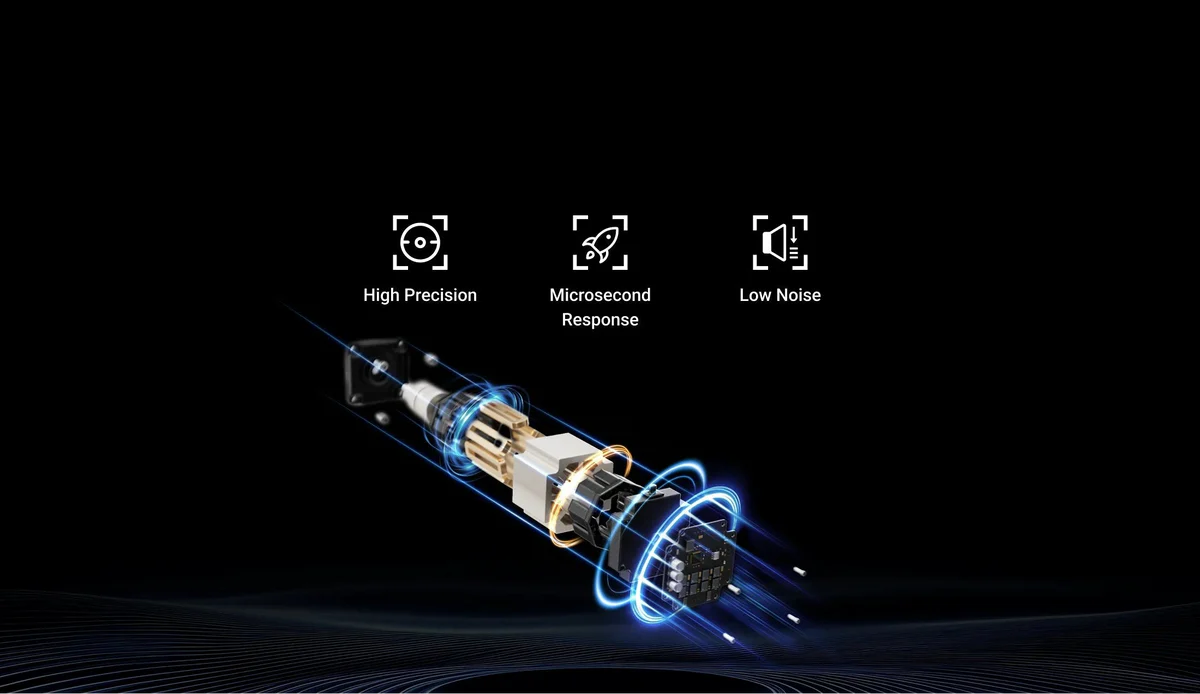
The FOC Motor Module uses closed-loop control with 25,600 microsteps per revolution — delivering C5-grade Z-axis positioning accuracy of ±2 µm under 80 kg load. 99.9% of movement errors stay within 2 µm. For high-load batch production of dense solid parts, this precision is what separates a production printer from a high-end prototyping machine.
Conventional stepper motors hit a peeling force ceiling that prevents reliable printing of solid, dense parts in arrays. The FOC motor's closed-loop control breaks through this ceiling — solid models can be nested and printed in production arrays reliably, with 99.6% of layer thickness errors within ±2 µm even at high print speeds.
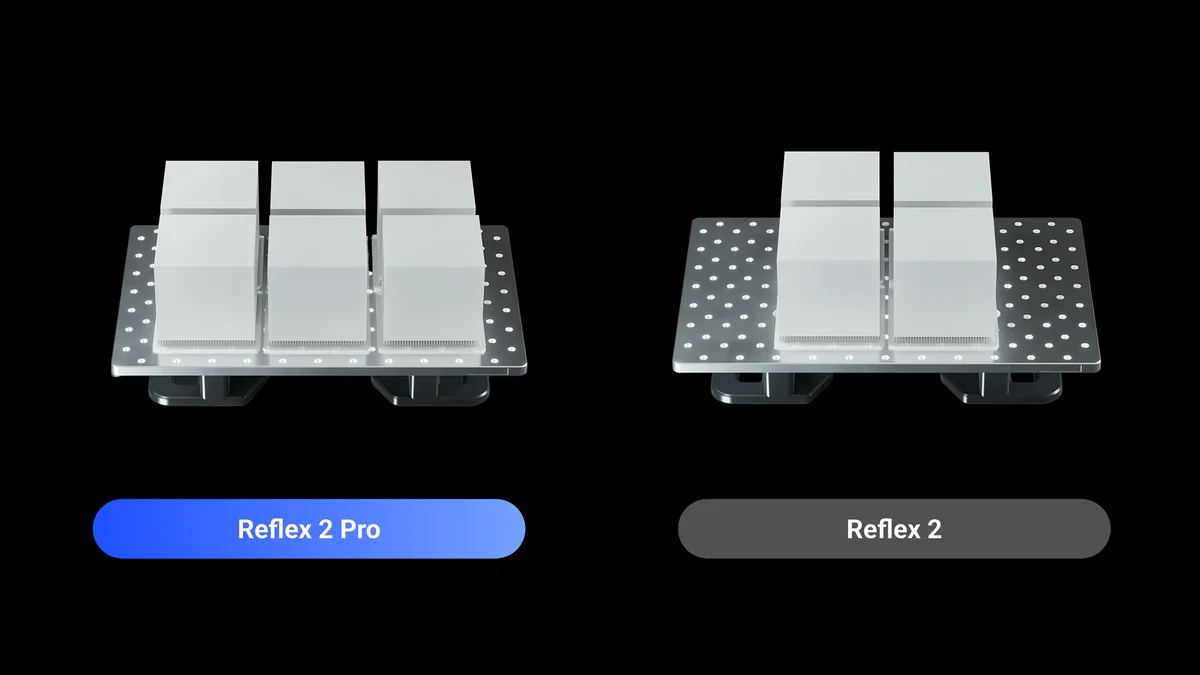
Compared to traditional stepper motors, the FOC Motor Module maintains ±2 µm layer accuracy even under high-speed print conditions. Speed increases on stepper machines come at the cost of accuracy — the FOC motor's closed-loop feedback eliminates that trade-off, enabling faster production cycles without dimensional drift.
On the Reflex 2, the Heating Scraper is an optional add-on. On the Reflex 2 Pro it is integrated as standard — the in-scraper heater combined with temperature sensor maintains resin at optimal viscosity ±1°C throughout the entire run. The scraper motion simultaneously prevents resin sedimentation, a critical advantage when printing with high-viscosity engineering resins like PAU20 or PAH270.
For PAU20 Tooling Resin, raising print temperature from 25°C to 35°C reduces liquid drainage waiting time by over 24% in large cross-section models. In production batches of tooling inserts, dense industrial parts, or orthotic devices, this translates to measurable throughput gains across a full shift without any user intervention.
Heat accumulation is the primary accelerator of LCD degradation in high-intensity resin printers. The Reflex 2 Pro's thermal ventilation system actively dissipates heat from both the light source and the screen, maintaining an operating temperature of 31.2°C to 35°C throughout any print session. This tightly controlled window is central to achieving the Amber Screen Pro's 6,000+ hour rated life at 35 W/m² intensity.
A floating build platform system actively adjusts up to ±0.15° and compensates gaps between platform and tank of up to 240 µm — automatically at the start of every print. No manual leveling, no test prints. For unattended overnight production, this means every job starts from a verified baseline regardless of how the platform was loaded.
Force sensors at 0.01 N sensitivity detect residue as small as 0.15 mm during the peel cycle and trigger an automatic print stop before damage occurs. This protection turns what would be a screen replacement event into a simple filter and clean cycle — and in production it means overnight runs don't destroy equipment when a part fails.
The high-precision ultrasonic sensor monitors resin level within ±0.5 mm accuracy, triggering automatic refill from the attached bottle both before and during active printing. Long production runs proceed without operator supervision. Swap the standard bottle push-button for the one included in the box for faster auto-refill flow rate.



| Specification | HeyGears Reflex 2 | Stratasys Origin One | 3D Systems Figure 4 |
|---|---|---|---|
| Entry Price | $1,799 | $25,000+ | $25,000+ |
| Build Volume | 230 × 144 × 230 mm | 192 × 108 × 370 mm | 124 × 70 × 346 mm |
| Light Engine Zones | 161 controlled zones | Single projection (DLP) | Single projection (DLP) |
| Z-Axis Accuracy | ±2 µm C5 Grade — 50 kg | ±25 µm typical | ±25 µm typical |
| Light Source Wavelength | 385+ nm — engineering resins | 385 nm (Origin PN) | 405 nm |
| Screen Lifespan | 6,000+ hours (rated) | Projector bulb — periodic | Projector bulb — periodic |
| Auto Leveling | Yes — 240 µm compensation | Manual | Manual |
| Auto Resin Refill | Yes — standard | No | No |
| Residue Detection | 0.01 N sensor — auto-stop | Not standard | Not standard |
| U.S. Partner Support | Rev1 Technologies — install, train, service | Stratasys direct / regional | 3D Systems direct / regional |
Competitor specifications sourced from published manufacturer data. Contact Rev1 for an application-specific comparison.


Talk to a Rev1 Technologies specialist. We'll review your production requirements, recommend the right configuration, and build a complete proposal within 1 business day. Authorized HeyGears Partner · Auburn Hills.